A Smarter Way to Handle Pest Problems Across Canada
- harryabstain892
- Mar 10
- 6 min read

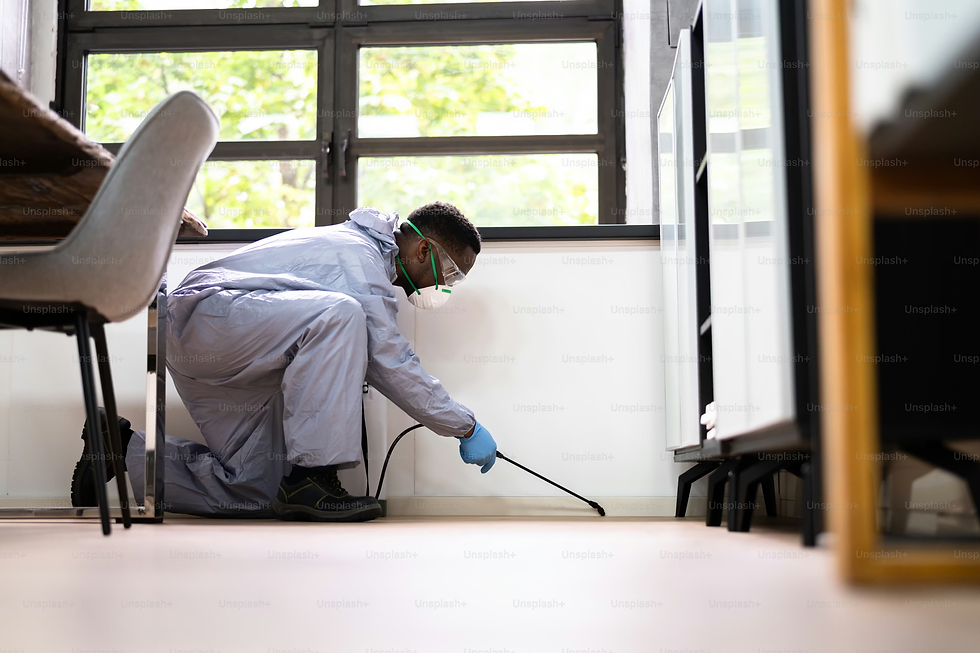
Pest problems cost Canadian homeowners, farmers, and municipalities hundreds of millions of dollars every year. From carpenter ants working their way through moisture-damaged wood in British Columbia to diamondback moths devastating canola fields on the Prairies, pests are a constant and evolving challenge. The instinct to reach for the nearest pesticide is understandable, but it's increasingly being replaced by a more thoughtful approach — one that considers the whole picture before taking action.
Canada has been at the forefront of this shift. The City of Vancouver was the first municipality in the country to formally adopt an alternative pest management policy back in 1987, following public concern over broad herbicide applications in city parks. Since then, cities like Edmonton, Toronto, and Ottawa, along with provincial governments and Agriculture and Agri-Food Canada (AAFC), have built on that foundation. The result is a national framework that balances effectiveness, cost, and environmental responsibility.
Why Pesticides Alone Fall Short
For decades, chemical pesticides dominated pest control. They were fast, widely available, and relatively straightforward to apply. But the drawbacks accumulated over time and became difficult to ignore.
Chemical pesticides are expensive, weather-sensitive, and non-selective. They often eliminate beneficial insects alongside the harmful ones — including pollinators, parasitic wasps, and predatory beetles that naturally suppress pest populations. Repeated use leads to pesticide resistance, forcing operators to increase concentrations to achieve the same results. Runoff from fields and lawns contaminates nearby waterways, a problem that carries serious ecological weight in a country with as much freshwater and as diverse a landscape as Canada.
Health Canada's Pest Management Regulatory Agency reported 1,467 pesticide incidents in the 2023–2024 fiscal year alone. These ranged from environmental findings to adverse health effects in both humans and animals. The regulatory agency re-evaluates every registered pesticide every 15 years, and many reviews have led to reduced application rates and stricter buffer zones — reflecting an ongoing recognition that current practices need adjustment.
Research from AAFC has consistently shown that cutting pesticide reliance does not mean accepting greater pest damage. Quite the opposite — when a layered, data-driven strategy is applied, outcomes are often better.
The Framework That Brings It Together
People often ask what is integrated pest management, and the answer is more practical than it sounds. It is a decision-making framework that draws on biological, cultural, physical, mechanical, and chemical tools to manage pests effectively while minimizing harm to human health, beneficial organisms, and the wider environment. It is not a single product or a fixed protocol — it is a process grounded in understanding pest behaviour, identifying conditions that allow populations to grow, and selecting the most appropriate response at each stage.
The core principle is straightforward: prevent first, treat second, and resort to chemical controls only when other options have proven inadequate.
Prevention: The First and Most Effective Step
No pest control strategy is more cost-effective than stopping an infestation from taking hold in the first place. For homeowners, this means sealing gaps and cracks around foundations, repairing water-damaged wood (carpenter ants are specifically drawn to soft, moist wood for egg-laying), trimming vegetation away from building exteriors, and storing firewood off the ground and at a distance from structures. For farmers, prevention involves selecting pest-resistant seed varieties, rotating crops to disrupt pest life cycles, maintaining soil health, and scheduling planting times to avoid overlap with peak pest activity.
Cultural control practices such as crop rotation have a measurable impact on pest populations. When a pest species is highly dependent on a single host plant, removing that plant from a field for even one season can sharply reduce local populations and break disease cycles in the soil.
Monitoring and Accurate Identification
You cannot manage what you have not measured. Regular monitoring is the backbone of any effective pest strategy, and it requires consistent physical inspections, insect traps, population counts, and documentation of environmental conditions.
Correct identification matters enormously. Most control treatments are pest-specific, so treating for the wrong species wastes resources and often harms the beneficial insects that are already doing suppression work. A ladybug larva and an aphid look very different up close, but a hasty assessment could result in eliminating the very predator that was managing the problem naturally.
Canada's Prairie Pest Monitoring Network, a federally led initiative, tracks pest and beneficial insect populations across Manitoba, Saskatchewan, Alberta, and the BC Peace region throughout the growing season. The network provides weekly updates on insect development and promotes science-based economic thresholds — the population levels at which intervention actually becomes justified. Since its launch nearly 25 years ago under AAFC researcher Dr. Owen Olfert, it has unified provincial monitoring efforts with consistent protocols that generate comparable data year over year.
Action Thresholds: Treating Only When It Makes Sense
Not every pest sighting requires a response. Action thresholds define the point at which a pest population or level of damage becomes significant enough to justify treatment — economically, ecologically, or both. Below that threshold, the cost or risk of treating may outweigh the benefit.
For canola producers, the Canola Council of Canada publishes science-based thresholds for dozens of insect species, from bertha armyworms to flea beetles. Farmers who reference these thresholds before spraying routinely reduce their input applications without any meaningful yield loss. The economic and environmental savings compound over time.
Control Methods in Order of Preference
When action is warranted, IPM applies controls in a deliberate sequence — starting with the least disruptive method and escalating only when necessary.
Biological controls use living organisms to manage pest populations. Predatory insects like ladybeetles handle aphid infestations; the City of Vancouver uses them on municipal trees as part of its ongoing pest management program. Parasitic wasps and beneficial nematodes are widely deployed in Ontario and BC greenhouses. These agents are highly targeted and leave no chemical residue.
Physical and mechanical controls include barriers, row covers, insect screens, sticky traps, and pheromone lures. They are especially valuable in organic operations or in situations where chemical use is restricted. Ontario's cosmetic pesticide ban, which took effect on April 22, 2009, made these tools a central part of residential and lawn care pest management across the province.
Chemical controls — synthetic or naturally derived — are used as a last resort. Even then, this approach requires selecting the lowest-risk registered product appropriate for the pest, timing the application carefully to protect non-target species, and documenting the treatment. AAFC's Pest Management Centre actively funds biopesticide research as an alternative to conventional synthetic products, and in fiscal year 2023–2024, Health Canada registered three new biopesticides, including a baculovirus targeting diamondback moths in canola crops.
Evaluation and Record Keeping
After any intervention, outcomes need to be reviewed. Did pest populations fall to acceptable levels? Were beneficial insects affected? What conditions contributed to the outbreak? Answers to these questions shape the next season's planning.
Record keeping is not optional — it is what transforms a one-time response into a long-term management system. Over several seasons, documented data on pest pressure, treatment timing, weather conditions, and results allows practitioners to identify patterns and make smarter, faster decisions.
How This Applies Across Canadian Regions
Canada's geographic and climatic range means pest challenges vary significantly from province to province.
In British Columbia, orchards contend with codling moths and spotted wing drosophila. Producers rely on pheromone traps and biological control agents rather than blanket spraying. The Okanagan Sterile Insect Release Program, which targets codling moths and apple maggots, is one of the most recognized programs of its kind in North America.
On the Prairies, canola, wheat, and pulse crops face pressure from cutworms, wheat midge, flea beetles, and sclerotinia stem rot. AAFC's Beaverlodge Research Farm in Alberta has spent decades developing biopesticide alternatives. Dr. Charles Vincent's work in particular has been instrumental in commercializing biological control products and reducing insecticide residues in farm environments.
In Ontario, the provincial IPM program provides producers with monitoring resources, threshold guides, and training. The cosmetic pesticide ban has also reshaped urban pest management significantly, pushing homeowners and lawn care operators toward non-chemical approaches by default.
Edmonton's IPM Policy C501A, adopted in 2019, directs the city's use of pesticides on public property in accordance with both federal Pest Control Products Act requirements and provincial legislation — mirroring a broader municipal trend toward formalized, ecologically informed pest management.
What This Means for Homeowners Hiring Pest Control Services
For homeowners, the same principles apply directly to choosing and working with a pest control company. Rather than requesting a blanket spray at the first sign of insects, a reputable service will begin with a thorough inspection, identify the species accurately, assess whether a nest is established indoors, and recommend targeted treatment only when evidence supports it.
Signs of a quality provider include detailed documentation of findings, clear explanation of which control methods will be used and why, and a follow-up visit to evaluate outcomes. Broad, preventive chemical applications with no prior assessment are a red flag worth taking seriously.
The Bigger Picture
Climate change is actively shifting pest pressure patterns across Canada. Species historically confined to warmer regions are moving northward. Activity windows are extending. Established pests are appearing earlier in the season and in greater numbers than historical averages once predicted.
The Canadian IPM Toolbox — a collaborative initiative backed by CropLife Canada, provincial grower organizations, and federal researchers — is working to standardize and distribute region-specific pest management plans for producers from BC orchards to Maritime blueberry farms. Whether the operation is a 5,000-acre wheat farm in Saskatchewan or a backyard vegetable garden in Halifax, the underlying logic is the same: understand the pest, monitor the situation, set a threshold, choose the most targeted response, and evaluate what worked.
Pest problems are not going away. But the way Canadians manage them is changing — toward systems built on knowledge rather than habit, and precision rather than prevention-by-saturation.



Comments